

Abdominoplasty
What is Abdominoplasty?
Abdominoplasty, commonly known as a tummy tuck, is a surgical procedure that removes excess skin and fat from the abdomen and tightens the abdominal wall muscles to create a firmer, flatter abdominal contour. The procedure addresses concerns that often cannot be resolved through diet and exercise alone, particularly after significant weight loss or pregnancy.
Pregnancy and substantial weight fluctuations can stretch the abdominal skin beyond its ability to retract naturally. The underlying muscles of the abdominal wall can also separate (a condition called rectus diastasis), creating a protruding appearance even when body weight is normal. These changes can affect body confidence, make clothing fit poorly, and sometimes cause functional concerns such as back pain related to weakened core support.
The extent of the procedure is tailored to your individual anatomy and concerns, ranging from mini abdominoplasty for localized issues to full abdominoplasty or fleur-di-lis abdominoplasty for more comprehensive correction.
ABOUT THE PROCEDURE
Pre-Surgical Planning
During your consultation, Dr Haddad will:
Discuss your concerns about your abdominal appearance and your goals for surgery
Examine your abdomen to assess skin laxity, the amount of excess tissue, muscle separation, and overall body proportions
Review your medical history, including previous pregnancies, weight changes, and any abdominal surgeries
Discuss your plans for future pregnancies (as these can affect results)
Assess your general health and any factors that might affect surgery or healing
Explain which type of abdominoplasty is most appropriate for your situation
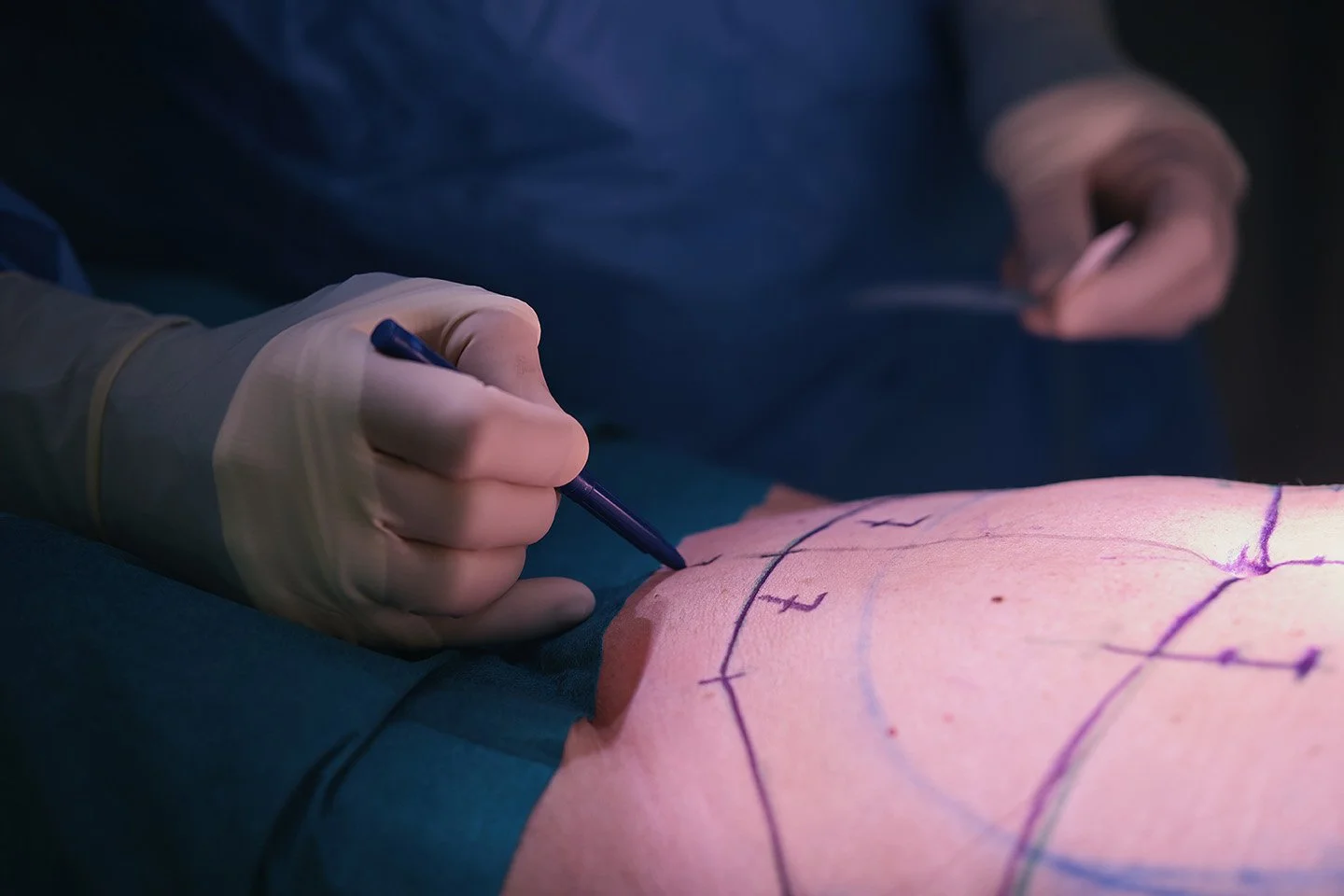
Take measurements and photographs for surgical planning
Discuss realistic expectations for abdominal contour and scarring
If you're significantly overweight, Dr Haddad may recommend weight loss before surgery, as abdominoplasty is not a weight-loss procedure but rather addresses contour concerns once weight is stable.
Surgical Technique:
Abdominoplasty is performed under general anaesthetic at St Vincent's Private Hospital in Darlinghurst. The procedure typically takes 2.5-4 hours, depending on the extent of correction needed.
The procedure involves:
Incision placement: A horizontal incision is made across the lower abdomen, typically positioned to be concealed within underwear or bikini lines. The length of the incision depends on the amount of excess skin. A second small incision is usually made around the navel to free it from surrounding tissue.
Skin and fat removal: The abdominal skin is lifted away from the underlying muscle, allowing access to the full length of the abdominal wall. Excess skin and fat are removed.
Muscle repair: If the abdominal muscles have separated (diastasis recti), they are brought back together and sutured in the midline, creating a firmer, flatter abdominal wall, and, sometimes improving bulging on the sides.
Repositioning: The remaining skin is pulled down and the excess is removed. The navel is repositioned through a new opening in the skin to maintain natural placement.
Closure: The incisions are closed in layers. Drains are typically placed to prevent fluid accumulation and are usually removed within 1-2 weeks.
Variations in technique:
Full abdominoplasty addresses the entire abdomen from ribs to pubis, with muscle repair and significant skin removal
Mini abdominoplasty treats only the lower abdomen below the navel, with a shorter scar and no navel repositioning
Extended abdominoplasty extends around the hips when excess tissue extends to the sides
Liposuction may be used in conjunction with abdominoplasty to refine contour in areas like the flanks, though this must be done conservatively to protect blood supply to the abdominal skin.
Who is Abdominoplasty For?
Ideal Candidates
Abdominoplasty may be suitable for people who:
Have excess abdominal skin that doesn't respond to exercise or weight loss
Massive weight loss patients who are at or near their goal weight, and have maintained stability for at least 6 months
Have separated abdominal muscles (diastasis recti) following pregnancy or weight gain
Are in good general health
Are non-smokers or willing to quit well before surgery (smoking severely compromises healing)
Have realistic expectations about surgical outcomes, scarring, and recovery
Are committed to maintaining results through healthy lifestyle habits
Abdominoplasty is commonly sought by women after pregnancy and by individuals who have lost significant weight, whether through lifestyle changes or bariatric surgery.
Who May Not Be Suitable
Abdominoplasty may not be appropriate for people who:
Are significantly overweight (weight loss should be achieved first)
Plan to have more children (pregnancy after abdominoplasty can compromise results)
Plan significant weight loss (the procedure is best performed after weight has stabilized)
Smoke or are unwilling to quit (this dramatically increases complication risk)
Have medical conditions that impair healing or increase surgical risk
Have unrealistic expectations about outcomes
Have had previous abdominal surgeries that may compromise blood supply (though this doesn't always preclude surgery)
Have had breast cancer or are at higher risk of breast cancer (the lower abdominal tissue may be the best option for breast reconstruction, and it may be preferable to preserve this).
A thorough consultation with Dr Haddad will determine whether abdominoplasty is appropriate for your circumstances.
Your Recovery & Aftercare
Abdominoplasty involves significant recovery, and you'll need to plan for help at home and time away from work and usual activities.
Hospital stay and early days: You'll usually spend 3-4 nights in hospital. Pain management and monitoring. When discharged, you may have drains in place (usually removed within 4-14 days) and will wear an abdominal compression garment. You'll be positioned in a slightly flexed position to reduce tension on the incision, and standing fully upright will take several days to a week.
First 2 weeks: This is the most demanding phase of recovery. You'll need help with daily activities, should avoid bending, lifting, or straining, and will need to move carefully. Most people take 2-4 weeks off work, depending on their job's physical demands. Swelling, bruising, and tightness are normal. The compression garment should be worn continuously for support.
Weeks 2-6: You can gradually increase activity levels. You'll continue wearing the compression garment for 6-8 weeks from surgery. The incision will appear raised and pink during this phase. Walking is encouraged, but strenuous exercise, heavy lifting, and core-focused activities remain restricted.
Months 2-6: Normal activities can generally resume, though high-impact exercise and heavy lifting should be discussed with Dr Haddad before resuming. Swelling continues to reduce, though some fullness may persist for several months. The abdominal contour becomes increasingly apparent as healing progresses.
Long-term: The scar will mature over 12 months, fading from red or pink to a paler line. The final scar typically sits low on the abdomen where it can be concealed by underwear, though scar quality and width vary between individuals. Numbness in the lower abdomen is common and may be permanent or improve gradually over many months.
Surgical Complications & Risks
Abdominoplasty is a significant surgical procedure with specific risks. Understanding these is important for informed decision-making. Dr Haddad will discuss your individual risk profile and how surgical technique and aftercare work to minimize complications.
General surgical risks
Bleeding or haematoma
Infection
Adverse reactions to anaesthesia
Deep vein thrombosis or pulmonary embolism (preventive measures are taken, but risk is higher with longer procedures)
Risks specific to abdominoplasty
Wound healing complications: The abdominal incision is sometimes under significant tension and healing issues can occur, particularly in the centre, or at the navel (umbilicus). These typically heal with wound care but may affect scar quality. Smoking dramatically increases this risk.
Seroma: Fluid accumulation under the skin is not uncommon and may require drainage with a needle, sometimes repeatedly. Drains help prevent this but don't eliminate the risk entirely.
Scarring: The abdominal scar is permanent and extends across the lower abdomen. While positioned to be concealed by underwear, the scar can widen, remain raised, or heal with irregularities. Scar quality varies significantly between individuals based on genetics, healing characteristics, and how well the incision is protected during recovery.
Numbness: The lower abdomen typically experiences reduced sensation after surgery. This may improve over months to years, but some degree of permanent numbness is common, particularly in the area between the incision and the navel.
Contour irregularities: The abdomen may have waviness, asymmetry, or other contour variations. Dog-ears (small areas of bunched tissue) at the ends of the incision sometimes occur and may require minor revision.
Skin loss: In rare cases, particularly in smokers or those with compromised blood supply, areas of skin may not heal properly. This can result in prolonged healing and potentially more extensive scarring.
Umbilical complications: Issues with healing around the repositioned navel can occur, though these are generally manageable.
Asymmetry: Perfect symmetry is difficult to achieve, and some differences between the two sides may persist.
Recurrence of muscle separation: If you become pregnant after abdominoplasty or experience significant weight gain, the abdominal muscles may separate again.
Revision surgery: Some patients request or require additional procedures to address contour concerns, scar revision, or other issues once healing is complete.
Frequently Asked Questions
How much weight will I lose with abdominoplasty?
Abdominoplasty typically removes skin and fat, but it's not a weight-loss procedure. The weight of the tissue removed is often surprising lower that you would expect. The primary goal is to improve abdominal contour by removing excess skin and tightening muscles. Any weight loss is a secondary benefit, not the main objective.
Where will the scar be?
The main scar runs horizontally across the lower abdomen, usually from hip to hip, typically positioned to be concealed by underwear. The exact length depends on how much skin is removed - more extensive corrections require longer scars. There's also a scar around the navel. While scars are permanent, they usually improve over 12 months, though final appearance varies between individuals.
Will I have feeling in my abdomen afterward?
Numbness in the lower abdomen is very common and often permanent to some degree. Sensation in the upper abdomen is usually preserved. Some feeling may gradually return over months to years, but many people have permanently reduced sensation in areas of the lower abdomen.
Can I have children after abdominoplasty?
Yes, pregnancy is possible after abdominoplasty. However, pregnancy will stretch the abdominal skin and may cause the muscles to separate again, potentially compromising your surgical results. For this reason, it's recommended to wait until you've completed your family before having abdominoplasty.
When can I exercise after surgery?
Walking is encouraged from the first few days and is important for recovery. More vigorous exercise should wait 6-8 weeks, and high-impact activities or core-strengthening exercises typically wait 12 weeks or until cleared by Dr Haddad. Returning to exercise too soon can increase swelling and potentially affect results.
Can abdominoplasty be combined with other procedures?
Abdominoplasty is sometimes combined with other procedures such as breast surgery (in a "mommy makeover"), liposuction of other areas, or hernia repair. Combined procedures mean a single recovery period but longer surgery time. This should be discussed carefully with Dr Haddad, considering safety and recovery factors.
Will insurance cover abdominoplasty?
Abdominoplasty is generally considered cosmetic and is not covered by Medicare or private health insurance. A rebate can sometimes be claimed in the context of massive weight loss (item number 30177), or for repair of symptomatic pregnancy related rectus diastasis >3cm (item number 30175); specific criteria need to be met in both cases, and it would be important to clarify cover with your health fund. Out of pocket costs will depend on time involved and complexity of your procedure.
How long do results last?
Results are long-lasting if you maintain stable weight and healthy lifestyle habits. The skin and tissue removed are permanently gone, and the muscle repair is usually durable. However, natural aging and significant weight fluctuations can affect your abdominal contour over time.
Can I have abdominoplasty if I've had previous abdominal surgery?
Previous surgery doesn't automatically preclude abdominoplasty, but it may affect the approach or increase risk. Previous incisions can affect blood supply to the abdominal skin. Dr Haddad will assess your individual circumstances during consultation.

NEXT STEPS
Request a Consultation
If excess abdominal skin or muscle separation is causing discomfort, abdominoplasty may help you achieve the flatter, firmer abdominal contour. Dr Haddad's experience in body contouring surgery can tailor the approach to your individual needs.
During your consultation, Dr Haddad will assess your abdominal anatomy, discuss the surgical approach most appropriate for you, and explain realistic expectations for outcomes, scarring, and recovery. He’ll answer your questions and help you determine whether abdominoplasty is the right decision for you.