

Gynaecomastia
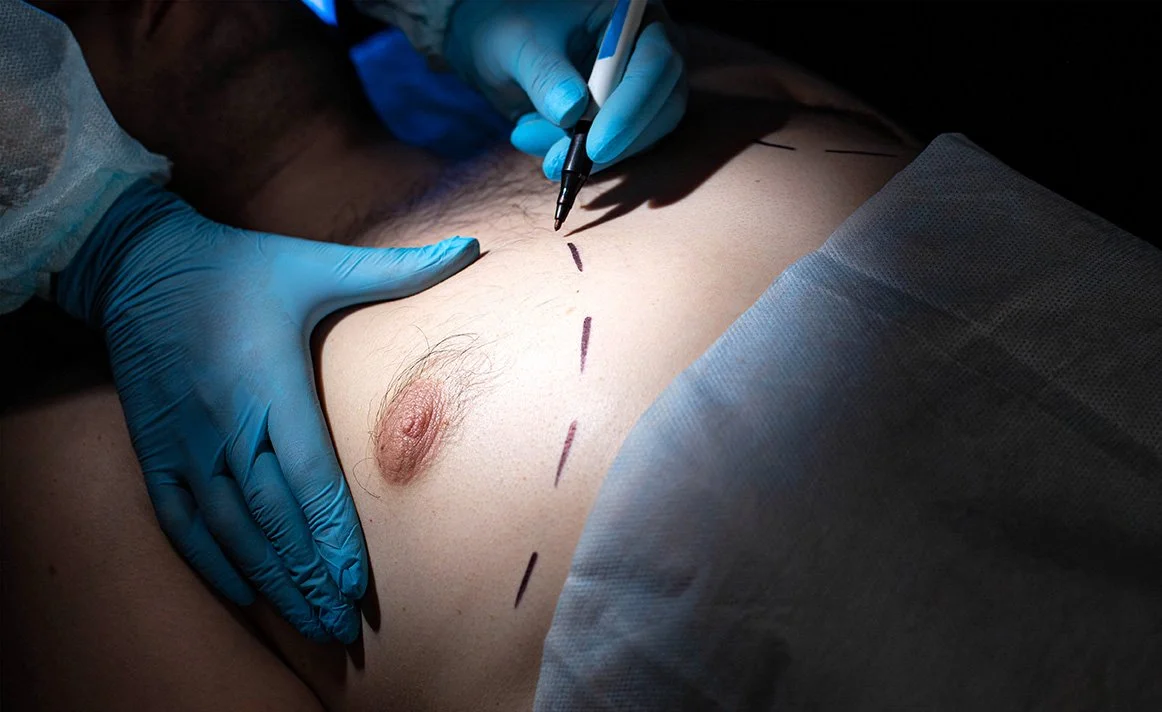
What is Gynaecomastia Surgery?
Gynaecomastia surgery is a procedure designed to reduce enlarged male breast tissue, creating a flatter, more masculine chest contour. Gynaecomastia itself refers to the development of excess breast tissue in men, which can occur due to hormonal changes, certain medications, weight gain, or unknown causes.
For many men, enlarged breast tissue causes significant self-consciousness and emotional distress. It can affect confidence in social situations, limit clothing choices, and make activities like swimming or going to the gym uncomfortable. Gynaecomastia can develop during puberty, in adulthood, or later in life, and while it sometimes resolves on its own in younger men, persistent cases often require surgical intervention.
The surgery typically involves removing excess glandular tissue and fat through a combination of excision and liposuction. The goal of surgery is to create a more natural-looking male chest contour while minimizing visible scarring. The specific technique used depends on the amount and type of tissue present, the degree of skin laxity, and the size of the areola.
ABOUT THE PROCEDURE
Pre-Surgical Planning
Your consultation with Dr Haddad will involve:
Discussion of your concerns and goals for surgery
Physical examination to assess the amount of glandular tissue and fat, skin quality, and chest shape
Review of your medical history, including any medications or substances that might have contributed to breast enlargement
Assessment of whether any underlying medical conditions need investigation before proceeding
Explanation of the surgical technique most appropriate for your situation
Discussion of realistic expectations for chest contour and scarring
In some cases, Dr Haddad may recommend further medical evaluation to rule out hormonal imbalances or other underlying causes, particularly if the gynaecomastia developed recently or is associated with other symptoms.
Surgical Technique
Gynaecomastia surgery is typically performed under general anaesthetic,. The procedure usually takes 1.5-3 hours depending on the extent of tissue to be removed. Surgery is performed at St Vincent's Private Hospital in Darlinghurst.
The approach depends on your individual presentation:
Liposuction alone may be sufficient if the enlargement is primarily due to fatty tissue with minimal glandular tissue. Small incisions are made and cannulas are used to remove excess fat. This approach results in minimal scarring.
Excision technique is necessary when firm glandular tissue is present. An incision is typically made along the lower border of the areola, through which glandular tissue is removed. The incision is designed to be as inconspicuous as possible.
Combined approach is most common, using liposuction to remove fat and direct excision to remove glandular tissue. This addresses both components of the enlargement.
Extended procedures may be needed for more severe cases involving significant skin excess. This might require larger incisions to remove excess skin and reposition the nipple-areola complex, resulting in more extensive scarring.
The nipple and areola are typically preserved on their blood supply and nerve connections to maintain sensation. In cases where the areola is enlarged, it can be reduced in size during the same procedure.
Who is Gynaecomastia Surgery For?
Ideal Candidates
Gynaecomastia surgery is suitable for men who:
Have persistent breast enlargement that hasn't responded to weight loss or medical treatment
Feel self-conscious or distressed about their chest appearance
Avoid certain activities or clothing due to their chest contour
Have realistic expectations about surgical outcomes
Are in good general health
Have stable weight (significant weight fluctuations can affect results)
Are non-smokers or willing to quit before surgery
Have completed puberty (for younger men, waiting until breast development has stabilized is usually recommended)
The condition can affect men of any age, from teenagers to older adults. The psychological impact can be significant regardless of when it develops.
Who May Not Be Suitable
Gynaecomastia surgery may not be appropriate for men who:
Are significantly overweight (weight loss may improve the condition and is often recommended first)
Have gynaecomastia caused by medication that can't be changed (addressing the underlying cause may resolve the issue)
Have unrealistic expectations about results
Are actively using anabolic steroids or other substances causing breast enlargement
Have medical conditions that increase surgical risk
Smoke and are unwilling to quit
A consultation with Dr Haddad will determine whether surgery is the right approach for you.
Your Recovery & Aftercare
Hospital Stay: Most gynaecomastia surgery requires an overnight hospital stay. You will be placed in a compression garment when you leave, and may have a temporary drain in place.
You'll leave surgery wearing a compression garment over your chest, which provides support and helps reduce swelling. Some bruising, swelling, and discomfort is normal and generally well-managed with pain medication.
First 1-2 weeks: The compression garment should be worn continuously. You'll need to avoid strenuous activity, heavy lifting, and upper body exercise. Most men take 1-2 weeks off work, depending on the physical demands of their job. Swelling and bruising gradually improve during this period.
Weeks 2-6: You can gradually return to normal activities, though chest exercises and heavy lifting should still be avoided. The compression garment may be worn for several weeks as directed. Swelling continues to subside, and the chest contour becomes more apparent.
Months 2-6: The chest continues to settle. Most swelling has resolved by 2-3 months, though subtle changes may continue for several more months. Scars gradually fade from red or pink to paler tones over 12 months.
Activity restrictions: Light walking is encouraged from the start. Upper body exercise and weightlifting should be avoided for a minimum of 6 weeks. Contact sports should wait until cleared by Dr Haddad.
Surgical Complications & Risks
All surgery carries risks, and understanding these helps you make an informed decision. Dr Haddad will discuss your individual risk profile and how surgical technique and aftercare work to minimise complications.
General risks of surgery
Bleeding or haematoma (blood collection under the skin)
Infection
Adverse reactions to anaesthesia
Delayed wound healing
Risks specific to gynaecomastia surgery
Asymmetry: Perfect symmetry is difficult to achieve, and some degree of difference between the two sides may persist. Pre-existing asymmetry may be improved but is rarely completely corrected.
Contour irregularities: The chest may have slight waviness or unevenness, particularly if there was significant tissue removal. Over-removal can create concavity or depression.
Nipple sensation changes: Temporary numbness or altered sensation is common and usually improves over months. Permanent changes can occur in a small percentage of cases.
Scarring: While incisions are placed to be as inconspicuous as possible, all scars are permanent. Scar quality varies between individuals based on genetics, skin type, and healing characteristics.
Recurrence: If the underlying cause of gynaecomastia isn't addressed (such as continued steroid use or certain medications), breast tissue may redevelop. Weight gain can also affect chest contour.
Seroma: Fluid collection under the skin may occur and sometimes requires drainage.
Skin irregularities: Particularly with liposuction, the skin may not retract completely smoothly, and some irregularity may be visible or palpable.
Dissatisfaction with cosmetic result: Dr Haddad will strive to set realistic expectations for your surgical outcome. Some under correction or overcorrection of the gynaecomastia and breast shape can occur.
Need for revision surgery: Some men request or require additional surgery to refine contour, address asymmetry, or remove additional tissue.
Frequently Asked Questions
Will the gynaecomastia come back after surgery?
If you maintain a stable weight then significant recurrence is uncommon. However, weight gain, use of anabolic steroids, or certain medications can cause breast tissue to redevelop. Maintaining a healthy lifestyle helps preserve results.
What will the scars look like?
Scar location and extent depend on the surgical technique used. Liposuction-only approaches result in very small scars that can be barely noticeable. Excision techniques create scars around the lower areola border, which typically fade and become inconspicuous over time. In some patients scar hypertrophy or pigmented scars can occur. More extensive procedures involving skin removal result in longer scars. Scar quality varies between individuals.
How flat will my chest be?
The goal is to create a natural-looking male chest contour. Some breast tissue is typically left behind to avoid creating a hollow or over-corrected appearance. The breast should appear flatter in contour, but expected outcomes depend on your starting point.
When can I return to the gym?
Light cardiovascular exercise can usually resume after 2-3 weeks. Chest exercises, upper body weightlifting, and heavy lifting should wait a minimum of 6 weeks. Returning too soon can increase swelling, sometimes cause bleeding, or place excessive tension on scars.
Will I have sensation in my nipples afterward?
Most men retain nipple sensation, though temporary numbness or hypersensitivity is common in the first few weeks to months. Sensation usually returns gradually. Permanent changes in sensation can occur.
Can this be done under local anaesthetic?
While smaller gynaecomastia procedures can be performed under local anaesthetic with sedation, it is Dr Haddad’s preference usually to perform these procedures under general anaesthetic for comfort and to allow optimal surgical precision.
What if I have very loose skin?
If you have significant skin laxity, tissue removal alone may not be sufficient. You may require skin excision, which involves larger incisions and more visible scarring. Dr Haddad will assess your skin quality during consultation and explain what's achievable.
How soon will I see results?
You'll notice an immediate reduction in chest size, though swelling obscures the final result initially. As swelling subsides over weeks to months, the chest contour becomes increasingly apparent. Final results are usually evident by 3-6 months, though subtle change continues up to a year.
Is this covered by Medicare or private health insurance?
Gynaecomastia is sometimes quite significant and tender. Some cases will attract a health fund and Medicare rebate. Out of pocket costs will vary depending on extent of surgery and time involved. Dr Haddad's team can discuss fees during your consultation.
NEXT STEPS
Request a Consultation
If gynaecomastia is affecting your confidence or quality of life, surgery may help improve your chest contour. During your consultation, Dr Haddad will assess your individual presentation, explain the surgical approach most suitable for you, and discuss what you can realistically expect from surgery. He'll answer your questions about the procedure, recovery, and outcomes, helping you make an informed decision about whether to proceed with gynaecomastia surgery.